Recycling and Sustainability for Hedge Trimming Woolwich
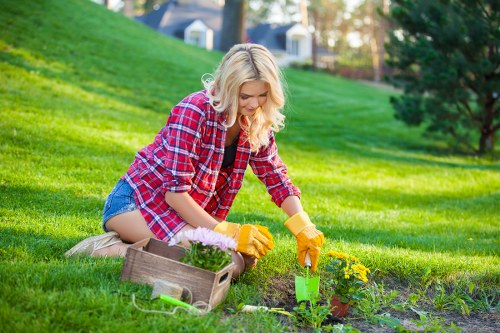 Hedge Trimming Woolwich has a clear mission: to manage garden and hedge waste with the lowest possible environmental impact. In a busy urban context like Woolwich, every hedge pruned and every pile of clippings is an opportunity to divert material from landfill and put organic matter back into productive cycles. Our approach combines practical on-site choices, collaboration with local borough systems, and investment in low-emission transport to deliver genuinely sustainable hedge services.
We work closely with the London Boroughs' existing approach to waste separation — separating green waste, food waste, dry recycling and residual rubbish — and align our collections with council guidance. By matching the boroughs' separation systems, our teams ensure that green material from hedge trimming goes to composting and chipping streams rather than being mixed into residual waste. That fit with municipal sorting keeps processing chains efficient and reduces contamination rates.
 Recycling percentage target: our operational target is to achieve a 70% recycling and reuse rate for all garden, hedge and shrub material collected in Woolwich by 2027. That target covers direct composting, wood chipping for mulch, material sent to community reuse projects, and pieces diverted to biomass facilities where appropriate. Hitting 70% will require continued attention to on-site separation, partnerships with local transfer stations, and community redistribution schemes.
Sustainable Rubbish and Gardening Waste Streams
To keep Woolwich hedge trimming and gardening waste out of landfill we prioritise three practical streams: on-site chipping and mulching for reusable material, transport to green waste composting sites for shredding and curing, and donation or reuse for community projects when larger pieces of timber and materials remain in good condition. We also sort and direct incidental mixed recycling — such as plastics used in garden products — to municipal recycling channels.
 Our teams are trained to segregate clippings, branches, and non-organic waste at source. That prevents the common problem of contamination that reduces recovery rates at transfer stations. By preparing load sheets and labelling loads according to borough codes, we help the receiving facilities process the material quickly and correctly. This on-the-ground care is a major reason our recycling figures keep improving year on year.
We make use of nearby civic amenity sites and local transfer stations where required. These include the borough transfer networks and household recycling centres that accept garden and woody waste for composting and chipping. Directing material to the proper local facility reduces haul distances, lowering emissions and turnaround times. We favour facilities with established green waste recovery programmes over those that only offer residual disposal.
Partnerships, Charities and Community Reuse
Partnerships are central to sustainable hedge services in Woolwich. We collaborate with local charities and community organisations that accept usable timber, brash, and coppiced material for projects such as community gardens, raised beds, habitat creation and small-scale woodworking. Working with reuse organisations and garden groups increases the proportion of material that is repurposed locally rather than processed industrially.
Typical collaborative activities include:
- Donating larger logs and timber to community workshops and garden projects
- Supplying mulch and woodchip to local allotments and parks departments
- Supporting community compost schemes with bulk green waste inputs
We actively maintain relationships with borough-supported community groups and registered charities that operate in the Woolwich and Greenwich area. These partnerships are a practical route to increase local circularity and support urban greening.
Low-carbon vans and route optimisation are essential. Our fleet increasingly uses electric vehicles and low-emission vans for short urban runs, with hybrid or Euro-6 diesel units reserved for the heavier or longer-distance loads. Beyond vehicle choice, we use route planning software and consolidated pick-ups to minimise vehicle miles travelled, cutting both emissions and disturbance in residential streets during hedge trimming operations.
 In addition to vehicle technology, we invest in lighter, electric-powered on-site equipment where practical. Battery-operated chippers, low-noise pruners and reduced-idle policies for vans keep carbon and air pollutant outputs down. We log vehicle emissions and run regular fleet reviews so improvements are measurable and ongoing.
 Metrics and transparency: we publish annual summaries of tonnage diverted, percentage recycled and estimated carbon savings from low-emission vans and local reuse partnerships. These metrics are used to refine our processes and to communicate progress toward the 70% garden waste recycling target. Stakeholders in Woolwich — residents, borough teams and community groups — can see our approach and the tangible benefits for urban biodiversity and waste reduction.
Combining council-aligned waste separation, local transfer station use, charity partnerships, and low-carbon transport creates a resilient model for hedge trimming and gardening waste in Woolwich. Our evolving practice is focused on practical, measurable outcomes: less landfill, more local reuse, and a cleaner, greener Woolwich neighbourhood.